On a humid March morning in 1781, Bernardo de Gálvez rode at the head of four Spanish ships into the narrow entrance of Pensacola Bay, flying his own flag from the lead vessel while British guns opened fire. It was a reckless move, and it worked. By May, after a two-month siege, Pensacola had fallen. Spanish arms had taken Mobile the year before and tightened the Gulf against Britain at the very moment the American war needed another front.1
That scene is the right place to begin because Spain’s contribution to American independence was both concrete and oddly easy to miss. The crown was not a sentimental ally. It was a strategic one. In 1777, Gálvez sent goods worth about $70,000 up the Mississippi and through the Ohio Valley toward Philadelphia, including medicine, cloth, weapons, and cartridge boxes; after Spain entered the war openly in 1779, its support widened into a Gulf campaign that tied down British troops, ships, and attention.1 The better-known French alliance has long absorbed the public memory, while Spain’s role has sat in the shadow of that simpler story.1
A Strategic Ally, Quietly
"Spain did not finance the Continental Army in any clean, direct sense, but it did underwrite the American cause through covert aid, commercial channels, and wartime pressure on Britain."
That distinction matters. The money moved through networks, not slogans. The Rodríguez Hortalez circle and related Spanish support helped keep arms and supplies flowing at critical moments, while the Gulf and Mississippi fronts forced Britain to defend an empire on more than one edge.1 By the time Yorktown closed the war, the Spanish campaign had already made British concentration harder than it otherwise would have been.1
The Continental Inheritance
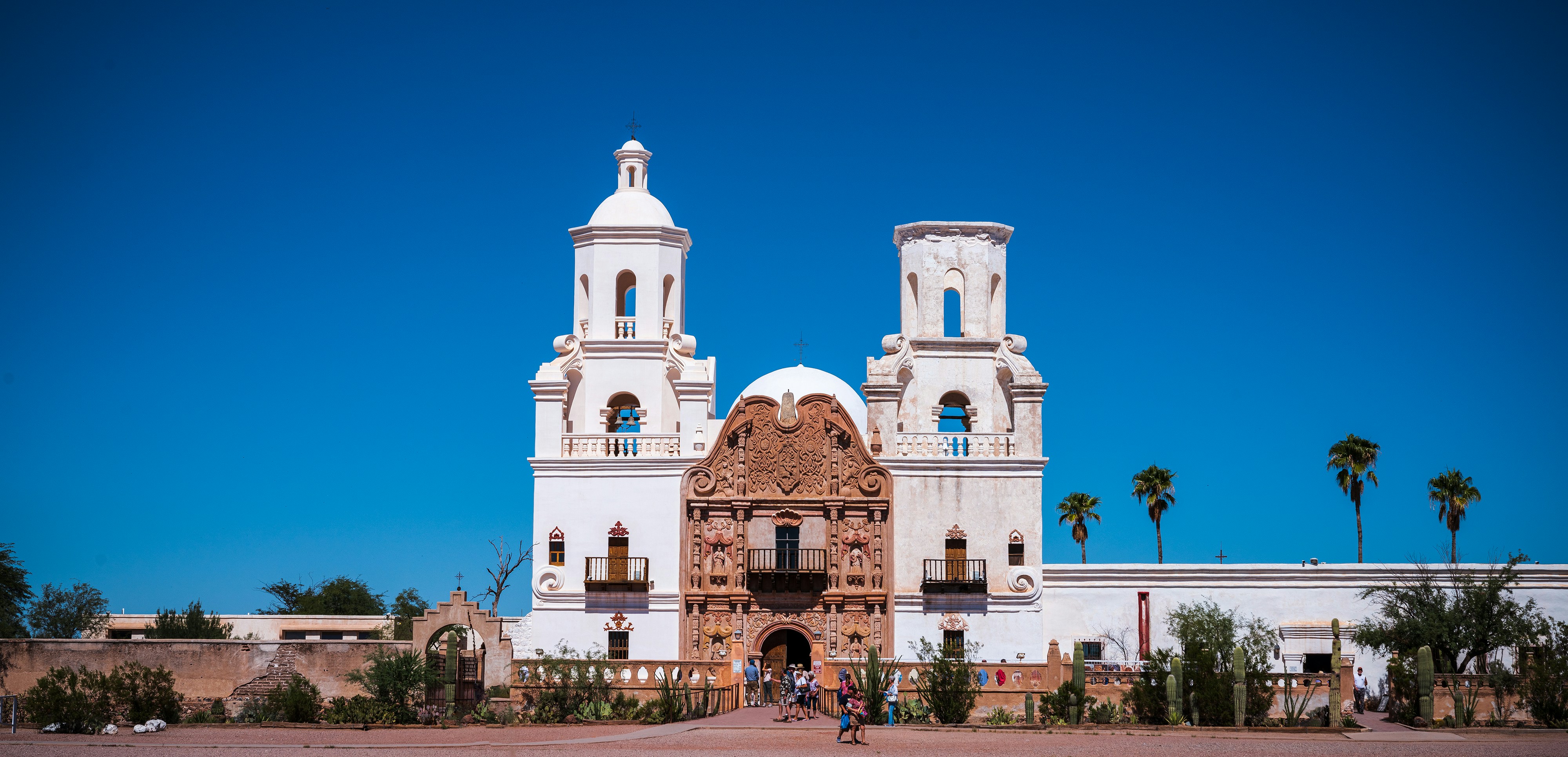
The deeper Spanish inheritance is territorial. Before the United States existed, Spain had mapped, occupied, and administered a continental arc from Florida through the Southwest and into California. That world was not marginal. It was a working imperial system of roads, presidios, missions, ranches, river settlements, and trade corridors. El Camino Real de Tierra Adentro linked Mexico City to New Mexico and is described by the Bureau of Land Management as the earliest Euro-American trade route in what became the United States.2 Spain’s frontier was not the Santa Fe Trail, which came later under U.S. and then Mexican circumstances; it was the older road system that made northern New Spain legible, governable, and commercial.2
Many of the institutions later associated with the American Southwest were inherited, adapted, or renamed from that Spanish order. Ranching vocabulary, the vaquero tradition behind the cowboy, acequia irrigation, and local water practices all came through a Spanish and then Mexican borderland long before they were folded into U.S. statehood. David J. Weber’s work remains foundational because it refuses to treat that region as a peripheral appendix to the national story; it shows instead that Florida, Louisiana, Texas, New Mexico, and California were once parts of a larger Spanish world whose imprint did not vanish when sovereignty changed.3 That legacy was not benign. Spanish rule relied on coercive labor systems, Indigenous dispossession, and slavery, and any honest account has to say so plainly. The same empire that built irrigation canals and trade routes also extracted, disciplined, and punished.3
A Modest Migration, a Lasting Imprint
Immigration from Spain to the United States between 1880 and 1930 was comparatively modest in national terms, but it was regionally consequential, especially among Galicians and other northwestern Spaniards. Spanish immigrants clustered in places where labor was available and ethnic networks could form, including Tampa’s cigar industry, where Spaniards joined Cubans, Asturians, and others in a manufacturing world that shaped the city’s economy and civic life.45 Their numbers never approached those of Italians, Irish, or Germans. Their impact was narrower, more local, and therefore easier to overlook. But in Tampa, New York, and a handful of industrial and port cities, Spanish communities built institutions, sent remittances home, and helped define a working immigrant public that sat between empire and republic.4
The Living Bridge
The living bridge between Spain and the United States is now less demographic than cultural. The Camino de Santiago has become one of the best-known pilgrimage routes in the world, and Americans are a visible part of that traffic. Recent statistics from the Oficina de Acogida al Peregrino show that the United States remains among the leading non-Spanish nationalities on the Camino, below Spain but alongside a small group led by Italy and Portugal.6 That matters because the Camino is not simply a devotional path. It is a durable transatlantic habit of movement, reflection, and return. In Galicia, that living tradition is being framed for Xacobeo 2027, the next holy year, which the Xunta de Galicia is already treating as a major cultural and civic moment.7
That is why Spain belongs at the opening of this series. It was present at the birth of the republic, then embedded in the geography, law, labor, and memory of the continent that followed. The story is not one of easy praise. It is a record of empire, exchange, violence, and institution-building. But if American greatness is to be written honestly at 250, Spain cannot remain off the page.12
Sources
- National Park Service. "Bernardo de Gálvez." Fort Matanzas National Monument, updated 2025.
- Bureau of Land Management. "El Camino Real de Tierra Adentro National Historic Trail." n.d.
- Weber, David J. The Spanish Frontier in North America. Yale University Press, 1992.
- Library of Congress. "Emigration from Spain." Hispanic Genealogy Guide, 2018.
- EBSCO Research Starters. "Spanish immigrants." 2024.
- Oficina de Acogida al Peregrino. 2025 Camino statistics.
- Xunta de Galicia. Xacobeo 2027 materials, 2026.