Hans Bethe
Germany → USA
Nuclear Physics
Summary
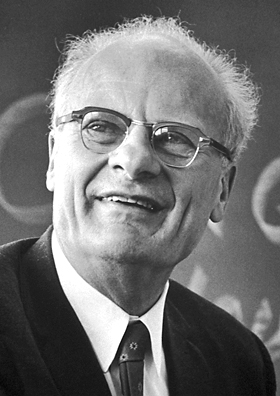
Bethe was dismissed from the University of Tübingen under the 1933 Nazi civil-service law because of his Jewish mother. After two years in England he reached Cornell in 1935, where he stayed for nearly seventy years. In 1938, on a train returning from a Washington conference, he worked out the proton-proton and carbon-nitrogen-oxygen cycles by which stars produce their energy — the work that won him the Nobel Prize in 1967. During the war he led the theoretical division at Los Alamos, working under J. Robert Oppenheimer. After Hiroshima, Bethe became one of the most persistent scientific voices for arms control, advising every American administration from Eisenhower to Clinton on nuclear matters. He continued publishing physics into his nineties.
Sources
- Encyclopædia Britannica, "Hans Bethe"
- Schweber, Silvan S. Nuclear Forces: The Making of the Physicist Hans Bethe. Harvard University Press, 2012.
- Nobel Foundation biographical archive
- Cornell University — Bethe papers